


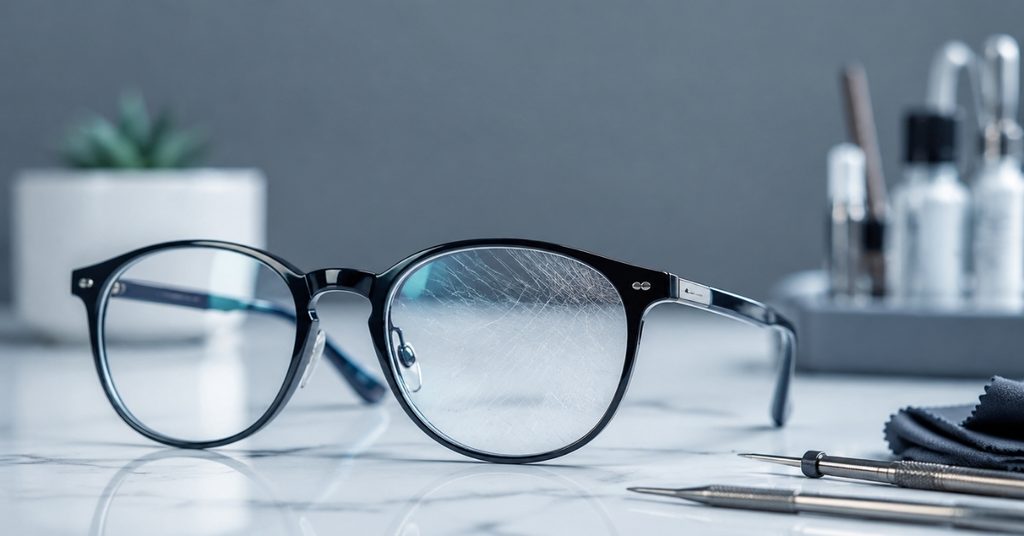
A scratch on your glasses can be surprisingly distracting. A tiny mark may catch the light while you are driving, working at a screen or reading while deeper scratches can sit directly in your line of sight and make otherwise good glasses uncomfortable to wear.
That naturally raises an important question: can scratched glasses be repaired, or do the lenses need replacing?
For prescription lenses, the answer is usually straightforward. A genuine scratch cannot normally be polished or repaired in a way that restores the lens to its original optical quality. Both plastic and glass spectacle lenses can be permanently scratched, and manufacturers such as ZEISS advise that scratches cannot simply be removed once they are present.
That does not necessarily mean buying a completely new pair of glasses. If your frames are still in good condition, replacing the damaged lenses may be the more practical solution. City Specs, for example offers lens replacement alongside frame adjustment and other eyewear repair services.
Why Scratched Glasses Are Difficult to Repair
Prescription lenses are not simply transparent pieces of plastic or glass. Their surfaces are manufactured to precise optical specifications so that light reaches your eyes correctly. Depending on your glasses, the lenses may also have hard coatings, anti-reflective treatments, water-repellent layers or other surface technologies.
Modern plastic lenses are particularly popular because they are lighter and more resistant to breakage than traditional glass lenses. However, plastic is naturally softer, which is why scratch-resistant coatings are commonly applied.
A scratch cuts into either the coating, the lens material itself or both. Removing it would require taking away material around the scratch until the surface became level again. On a prescription lens, that is not comparable to polishing an ordinary piece of glass: the lens surface and coatings are part of the optical system.
ZEISS explains that spectacle lenses are manufactured and surfaced with considerable precision before protective and functional coatings are applied. This is why attempting to polish a finished prescription lens at home is not a reliable optical repair.
A Scratch May Affect More Than Appearance
A scratch near the edge of a lens may initially seem cosmetic. A mark directly in front of your pupil can be much more noticeable.
Scratches can scatter light rather than allowing it to pass cleanly through the lens. A build-up of fine scratches can therefore reduce clarity and make the lens appear hazy, particularly in difficult lighting.
This can become especially annoying when driving after dark, looking towards bright lights or spending long periods concentrating on detailed work.
Can an Optician Polish Scratches Out of Glasses?
In most cases, an optician will not polish scratches out of prescription lenses. If a scratch is permanent and affects the lens surface, replacement is normally the appropriate solution.
Professional optical laboratories certainly use polishing during lens manufacture. The important difference is that this happens as part of a precisely controlled manufacturing process designed to create the required optical surface. It is very different from polishing an already finished and coated prescription lens to remove localised damage.
An optician can, however, examine your glasses and determine what has actually happened. What looks like scratching could sometimes involve damaged coating, surface contamination or another issue with the lens. An assessment is particularly useful before replacing expensive varifocal, high-index or specialist lenses.
When Should Scratched Lenses Be Replaced?
Not every tiny mark makes glasses immediately unusable. The location, depth and extent of the damage matter.
You should consider having the lenses professionally assessed when:
- The Scratch Is Directly In Your Normal Line Of Sight;
- Bright Lights Produce Noticeable Glare Or Scattered Reflections;
- The Lens Looks Cloudy Because Of Numerous Fine Scratches;
- You Are Constantly Noticing The Mark While Reading, Working Or Driving;
- An Anti-Reflective Or Other Coating Appears Damaged Across A Larger Area;
- The Damage Is Making You Clean Or Rub The Lenses Repeatedly Because They Never Appear Clear.
ZEISS advises replacing scratched lenses because even fine surface damage can interfere with how light passes through them. City Specs gives similar advice in its lens-care guidance.
If you are uncertain, taking the glasses to an optician is preferable to experimenting with the lens yourself.
Can You Replace the Lenses Without Replacing the Frames?
Often, yes. If you like your existing frames and they remain structurally sound, new prescription lenses may be fitted into them. In the UK, fitting new lenses into an existing frame is commonly referred to as reglazing.
This can make sense when an expensive or favourite frame still fits properly but the lenses have become scratched, your prescription has changed or you want to upgrade the lens specification. UK dispensing guidance recognises reglazing as the fitting of new lenses into an existing frame.
The frame still needs to be examined first. An optician will consider its age, condition, shape and suitability before fitting new lenses.
City Specs lists lens replacements and frame adjustments among its repair services. Its Manchester store also has an on-site laboratory that allows most prescription glasses to be dispensed within an hour, although the exact turnaround will naturally depend on the prescription, frame and lens specification required.
Should You Replace One Scratched Lens or Both?
If only one lens is damaged, replacing a single lens may sometimes be possible. Whether it is the best choice depends on your prescription and the type and age of the existing lenses.
For example, an older lens may have developed normal wear or coating changes that make it look noticeably different beside a brand-new replacement. With specialist coatings, tints or certain multifocal designs, matching the existing lens may also require more consideration.
The sensible approach is to let the dispensing optician compare the lenses and discuss the options before ordering a replacement. The NHS repair and replacement system also recognises that repairs may involve one lens, both lenses, part of the frame or the entire frame depending on what has been damaged.
Do Home Remedies Remove Scratches From Glasses?
Search online and you will find plenty of supposed fixes for scratched lenses. Many involve abrasive household products. They may make sense for polishing certain non-optical materials, but prescription lenses are different.
Avoid experimenting with methods such as:
- Toothpaste Or Baking Soda Used As Polishing Compounds;
- Abrasive Household Cleaners;
- Products Intended For Car Paintwork, Furniture Or Ordinary Glass;
- Attempting To Strip A Damaged Lens Coating Yourself.
Even lenses with high-quality hard coatings can still be damaged by inappropriate cleaning. Modern lenses may contain several thin functional layers, so aggressive rubbing or unsuitable chemicals can create additional surface damage rather than solve the original problem.
If the scratch disappears only because part of the lens surface or coating has been worn away, the lens has not truly been restored.
How to Prevent Your Glasses From Getting Scratched
Prevention is far easier than dealing with a damaged prescription lens.
Clean Grit Away Before Rubbing the Lens
One of the most common mistakes is wiping dusty glasses immediately with a shirt, jumper or dry tissue. Small particles trapped between the material and the lens can act like abrasives, gradually producing fine scratches.
ZEISS specifically advises against using clothing and tissues for this reason. Proper lens-cleaning products and clean microfibre cloths are safer choices.
If your glasses are particularly dusty or gritty, removing loose debris before rubbing the surface reduces the risk of dragging particles across the lens.
Store Glasses in a Proper Case
Glasses left unprotected in handbags, pockets, cars or on desks can easily come into contact with keys, coins and other hard objects.
When you are not wearing them, use a protective case. If you temporarily need to place glasses on a surface, avoid resting them lens-side down. City Specs also recommends storing spectacles in a hard case and keeping the lenses facing upwards when a case is unavailable.
Choose Durable Lens Coatings
Scratch-resistant does not mean scratch-proof but a good hard coating can make plastic lenses considerably more resistant to everyday wear.
City Specs offers lenses and coatings from manufacturers including ZEISS and Essilor, while modern coating systems can combine scratch resistance with anti-reflective, water-repellent and easier-cleaning properties.
For people who regularly work outdoors, travel frequently or tend to be hard on their glasses, discussing durability with the optician when ordering lenses can be worthwhile.
What About Scratched Children’s Glasses?
Parents should arrange for scratched children’s lenses to be checked rather than leaving significant damage untreated, particularly when the glasses are worn throughout the day.
There may also be financial help available. In England, children under 16 can qualify for an NHS optical repair or replacement voucher if their glasses or contact lenses are lost or damaged. Eligibility rules differ for adults so it is worth asking the optician what applies in your circumstances.
When Is It Better to Buy New Glasses?
Lens replacement is attractive when the existing frame is comfortable, suits you well and remains in excellent condition. There are situations, however, where replacing the whole pair makes more sense.
An ageing frame may already have loose hinges, distorted sides or general wear. Your prescription may also need updating, or your visual requirements may have changed since the glasses were originally made. In those circumstances, investing in new lenses for an old frame may offer less value than choosing a new complete pair.
An optician can assess both the frame and lenses rather than treating the scratch in isolation.
Scratched Glasses: Repair the Frame, Replace the Damaged Lens
So, can scratched glasses be repaired? If the problem is a scratched prescription lens, generally not in the conventional sense of polishing away the mark and restoring the original surface. Genuine scratches in plastic or glass lenses are permanent, and significant damage is normally addressed by replacing the affected lens.
That does not automatically mean throwing away your favourite glasses. A sound frame can often be retained while replacement lenses are fitted and other issues such as frame alignment may be repairable separately.
City Specs provides frame adjustments and lens replacement services from its Manchester and Sheffield locations, making professional assessment a sensible first step before deciding whether you need replacement lenses or an entirely new pair.
Lens technology and protective coatings continue to become more durable, but scratch resistance should never be confused with scratch-proofing. Good cleaning habits, careful storage and appropriate lens coatings remain the best defence against damage—and when a scratch begins interfering with comfortable vision, replacing the lens is safer than trying to polish the problem away.
FAQs
Can small scratches on glasses be buffed out?
Generally, no. Prescription lenses have precisely manufactured surfaces and may contain multiple coatings. Buffing can damage those surfaces rather than restore the lens.
Does toothpaste remove scratches from glasses?
It is not recommended. Toothpaste can be abrasive and may damage lens coatings or create further surface wear.
Can scratched prescription lenses be replaced without buying new frames?
Yes, provided the existing frame is suitable and in good condition. An optician can assess the frame before fitting replacement lenses.
Are scratch-resistant glasses completely scratch-proof?
No. Scratch-resistant coatings make lenses more durable but even coated lenses can still be scratched through abrasion or improper cleaning.
Should I replace glasses if the scratch does not bother me?
A very small peripheral mark may not immediately affect how you use your glasses but scratches in your line of sight or widespread surface damage should be assessed because they can reduce clarity and scatter light.


