


Regular eye monitoring supports lasting visual health by identifying changes early, keeping your prescription appropriate and helping clinicians decide when further care is needed. Its value builds across appointments: previous results give your optometrist a reference against which to assess your eyes today.
You may feel that your sight is unchanged, particularly when everyday tasks remain manageable. However, some eye conditions develop without noticeable symptoms. Keeping to a recommended examination schedule gives you a better chance of addressing problems before they significantly affect your life.
Building a record of your eye health
An eye examination records more than the smallest letters you can read. Your optometrist assesses your vision and eye health, choosing tests according to your symptoms, history and clinical needs. Findings may include your prescription, eye pressure and the appearance of the retina and optic nerve.
When comparable results are available from earlier visits, clinicians can look for changes that need closer attention. Photographs and scans can provide a useful record, particularly when monitoring the optic nerve. A finding that needs clarification may prompt repeat testing before a decision is made.
CitySpecs offers OCT imaging as part of its eye examination services in Sheffield. Optical coherence tomography produces detailed images of retinal layers. These can add information to the examination, although a scan must be interpreted alongside other findings. Your optometrist can explain whether it is appropriate for you.
Identifying conditions before symptoms become obvious
Glaucoma shows why waiting for blurred vision can be risky. It often develops slowly, and people may be unaware that their optic nerve is being damaged. Routine examinations can identify suspicious signs and prompt referral for specialist assessment.
Treatment cannot restore sight already lost to glaucoma, but it can help slow further damage. Earlier recognition therefore creates an opportunity to protect remaining vision.
Other conditions call for different decisions. Cataracts can gradually increase glare and make reading or night driving harder. Reviewing their effect on daily activities helps inform discussions about treatment. Checks of the macula, which supports detailed central vision, can also identify signs that warrant further assessment. Monitoring helps distinguish these problems instead of assuming every change simply requires stronger glasses.
Keeping everyday vision clear and comfortable
Visual wellness also means being able to work, read and enjoy hobbies comfortably. Mention difficulties that a letter chart may not fully capture, such as losing clarity during prolonged reading or struggling with your usual computer distance.
Your optometrist can assess whether your prescription still suits your needs and whether focusing or eye coordination requires attention. Describe the tasks you find difficult, including how far away you hold reading material or position your screen.
Dryness can also cause intermittent blur, grittiness or watering. Reviewing symptoms, medicines, contact lens use and working conditions helps identify possible contributors. Depending on the findings, advice may include regular screen breaks, changes to contact lens wear or suitable treatment. Follow-up allows persistent symptoms to be reassessed if the initial approach has not helped.
Turning findings into appropriate follow-up care
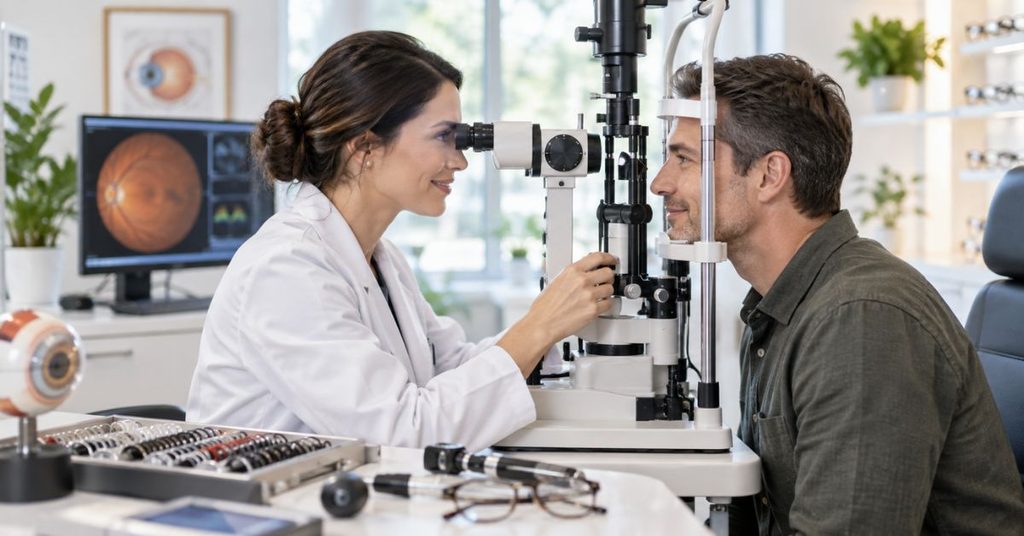
The benefit of an examination depends on what happens afterwards. Your optometrist should explain any findings, whether you need another appointment and whether further investigation is necessary. Some results need observation; others require referral to a specialist service.
If you already receive treatment for an eye condition, attend the monitoring appointments arranged by your care team. These help establish whether treatment is working and whether it needs adjusting. Report difficulties using prescribed drops so the team can help.
For people with diabetes, diabetic eye screening and routine eye examinations serve different purposes. Screening checks for diabetic retinopathy, while routine examinations assess prescription needs and other aspects of eye health. Attend both as advised; one does not replace the other.
Choosing an examination schedule that suits your risk
For most adults, an eye examination every two years is the usual recommendation, with earlier appointments when advised. Your own interval should reflect your eye health and clinical circumstances.
A close family history of glaucoma can mean more frequent checks are appropriate. Tell your optometrist about relevant diagnoses in your parents or siblings, changes in your general health and any new medicines.
If you have an established eye condition, follow the schedule set by your clinician, which may be much shorter. Ask when you should return and record the date before leaving. A routine reminder should never delay assessment of new symptoms.
Making each appointment more useful
Bring the glasses you currently use, an up-to-date medication list and any relevant eye clinic letters. CitySpecs’ guide to preparing for your eye test explains what to bring and what to expect.
Be specific about changes. Note when a symptom begins, whether it affects one or both eyes, and whether it is constant or comes and goes. Mention any previous eye surgery and treatments you are receiving elsewhere.
Before you leave, make sure you understand the next step. Ask what needs monitoring, who will arrange any referral and when you should expect to hear. Knowing whom to contact if an appointment is delayed helps prevent a recommended review from being missed.
Knowing when to seek urgent help
Regular monitoring works alongside prompt attention to new symptoms. Seek an urgent optician appointment or contact NHS 111 for first-time flashes or floaters, a sudden increase in them, or a dark curtain or shadow across your vision.
If you suddenly cannot see from one or both eyes, or develop sudden severe eye pain, go to A&E or call 999. Do not drive yourself.
These symptoms need assessment even if your last examination was reassuring. A recent normal result describes your eyes at that appointment; it cannot rule out a problem that develops afterwards.
Frequently asked questions
Does normal eye pressure rule out glaucoma?
No. Glaucoma can develop when eye pressure is within the normal range. Clinicians consider the optic nerve, visual field and other findings alongside pressure measurements.
Does a referral mean I definitely have an eye disease?
No. A referral may be needed to investigate an uncertain finding or assess risk more closely. Further tests help establish whether treatment or continued observation is appropriate.
Will my pupils need to be dilated?
Possibly, depending on the examination. Dilating drops can temporarily blur vision and increase light sensitivity. If they are needed, arrange transport and follow advice about when driving is safe again.
Do I have to buy glasses after an eye test?
No. An examination may show that your existing prescription remains suitable. You are not obliged to buy glasses from the practice where you had your test.
What should I do if my follow-up appointment is delayed?
Contact the clinic or practice responsible and explain when the review was recommended. Ask what to do next, particularly if your symptoms or vision have changed.


