


The craft behind a premium frame becomes apparent when you handle it. An acetate rim feels smooth along its inner edge. A slender metal bridge holds its shape. The arms open with controlled movement, and the frame rests comfortably without constant adjustment.
These qualities come from decisions made throughout design, manufacture and fitting. Across the designer glasses and sunglasses at City Specs, different construction methods serve different purposes. Understanding those methods helps you recognise where craftsmanship adds something useful to the glasses you wear.
Design Begins With Proportion
A frame designer must consider how the front, bridge and arms work together. Changing the thickness of the upper rim alters its visual weight. Moving the hinge changes how the arms meet the front. Even a modest adjustment to bridge shape can change where the frame sits.
The challenge is to preserve the intended silhouette while creating a wearable structure. A substantial front needs support without excessive pressure around the ears. A fine metal design needs sufficient strength at its joints.
When assessing a frame, look at it from the side as well as straight ahead. The transition between the front and arms often reveals more about its construction than the outline alone.
Material Choice Shapes the Result
Acetate gives makers scope for layered colour, translucent effects and sculpted profiles. In patterned acetate, colour can extend through the material, creating depth that becomes visible around the edges. The choice of sheet and the position of the cut influence the finished appearance.
Titanium suits a different brief. Its combination of low weight, strength and corrosion resistance makes it useful for slender frames. Stainless steel also appears in premium collections, while combination frames bring acetate and metal together within one design.
The material name is only part of the specification. Thickness, component shape and the way pieces connect determine how the finished frame behaves. A thicker acetate design and a fine titanium frame can both demonstrate excellent craftsmanship while feeling quite different to wear. City Specs explains these practical differences in its guide to choosing designer frames that last.
Shaping Requires Accuracy at Every Stage
For acetate frames made from sheet material, the recognisable silhouette begins with cutting and shaping. The front needs openings for the lenses, a carefully formed bridge and secure attachment points for the arms. These features must work together within a relatively small object.
In a conventional full-rim frame, the groove inside the rim receives the shaped edge of the lens. Its accuracy matters because the lens needs secure, even support. Areas around hinges also require enough material to support repeated movement.
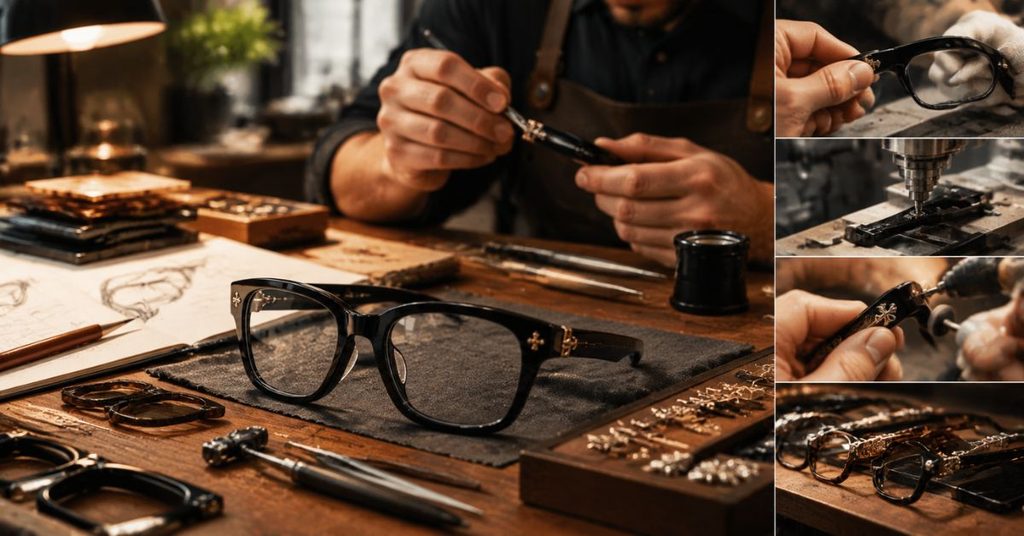
Handwork and machinery can contribute to the same frame. Precision equipment helps create consistent components; skilled finishing and assembly refine the result. City Specs describes this combination of traditional and modern processes across its featured eyewear collections. A useful question is which stages are completed by hand, rather than simply whether a frame is labelled handmade.
Finishing Refines the Surfaces You See and Feel
Once the basic shape exists, finishing determines how convincingly the design comes together. Acetate may undergo tumbling and polishing to smooth the surface and develop its lustre. City Specs discusses these stages in its overview of luxury eyewear construction.
Good finishing deserves close inspection around the bridge, inner rims and temple tips, where the frame comes near the skin. Look for smooth transitions and a consistent surface. Deliberately crisp decorative edges should still be cleanly executed.
Metalwork calls for similar attention. Inspect the areas around joints and decorative components for roughness or uneven finishing. If a frame has a precious-metal finish, ask exactly what the specification describes: the underlying material, a coating or a solid component. Each represents a different construction choice.
Hinges Make Small Engineering Decisions Noticeable
The hinge connects the arms to the front and governs their movement. It is a small component that repeatedly takes load whenever you put glasses on or remove them.
Premium construction includes several approaches. Some frames use conventional screwed hinges; others use screwless mechanisms. Removing a screw eliminates that particular part’s potential to loosen, but the remaining mechanism still needs accurate manufacture and appropriate care.
Open and close the arms gently when comparing frames. Movement should feel controlled, with no unexpected catching or excessive sideways play. Ask how the mechanism is serviced and whether replacement components are available for that model. The number of visible screws alone tells you little about the quality of the complete frame.
Fitting Completes the Craft
The final stage happens on the wearer’s face. Bridge contact, arm position and overall width must suit the individual. Adjustments should work within the frame’s design and material limits.
Prescription lenses also influence the result. Their weight contributes to the finished balance, and the frame must provide the dimensions required by the chosen lens design. Varifocals, for example, need sufficient usable depth for their viewing zones.
During fitting, smile, turn your head and look down. Notice any slipping, pinching or contact with your cheeks. The practical checks in City Specs’ guide to choosing eyewear that suits you help connect attractive design with comfortable wear.
Serviceable Details Support Lasting Use
Craftsmanship also matters after the first fitting. Accessible fixings, replaceable pads and obtainable arms can make maintenance more practical, depending on the model.
Before buying, ask what can be replaced and whether the frame may accept new lenses later. Reglazing depends on its condition and the new prescription, so suitability needs to be checked.
City Specs’ explanation of professional glasses repair shows why inspection matters before repairs or lens replacement. Preserving a sound frame allows its original workmanship to remain useful.
Frequently Asked Questions
Are all premium designer frames handmade?
No. Production methods vary. A frame may combine machine-cut components with manual assembly or finishing. Ask which processes are completed by hand for the particular model.
Is acetate better than titanium?
Neither is universally better. Acetate offers depth of colour and sculptural possibilities; titanium supports lightweight construction. The right choice depends on the design, fit and feel you prefer.
Do heavier frames indicate better quality?
No. Weight reflects the materials, dimensions and components used. Judge construction through secure joints, controlled hinge movement and clean finishing, then assess comfort with the intended lenses.
Does handmade mean the frame is bespoke?
No. Handmade describes aspects of production. Bespoke describes a frame made to individual requirements. A handmade frame can still be produced in standard sizes.
Can premium frames accommodate replacement lenses?
Often, provided the frame remains structurally sound and suits the new prescription. An optician should check its condition and construction before agreeing to reglaze it.


