A blocked ear can make everyday life surprisingly difficult. Conversations become muffled, the television creeps louder, hearing aids may whistle or feel less effective, and the constant sensation of fullness can be distracting. Earwax is normally protective and clears naturally, but when it becomes impacted it can cause hearing loss, earache, tinnitus and sometimes dizziness.
When professional removal is needed, two terms come up again and again: microsuction and ear syringing. They are not the same procedure, and in the UK there is an important distinction between traditional manual syringing and modern electronic ear irrigation. Understanding that difference makes it much easier to choose appropriate care.
Why the Earwax Removal Method Matters
Earwax removal is not simply a matter of getting wax out by any available means. The safest approach depends on the condition of the ear canal and eardrum, previous ear surgery or infections, the consistency and position of the wax, and how comfortable the patient is with the procedure.
NICE guidance recognises electronic irrigation, microsuction and other manual removal techniques for adults who need earwax removed. It specifically advises against traditional manual syringing in adults. So when people compare “microsuction vs ear syringing”, the practical modern comparison is usually microsuction versus electronic irrigation.
What Is Microsuction?
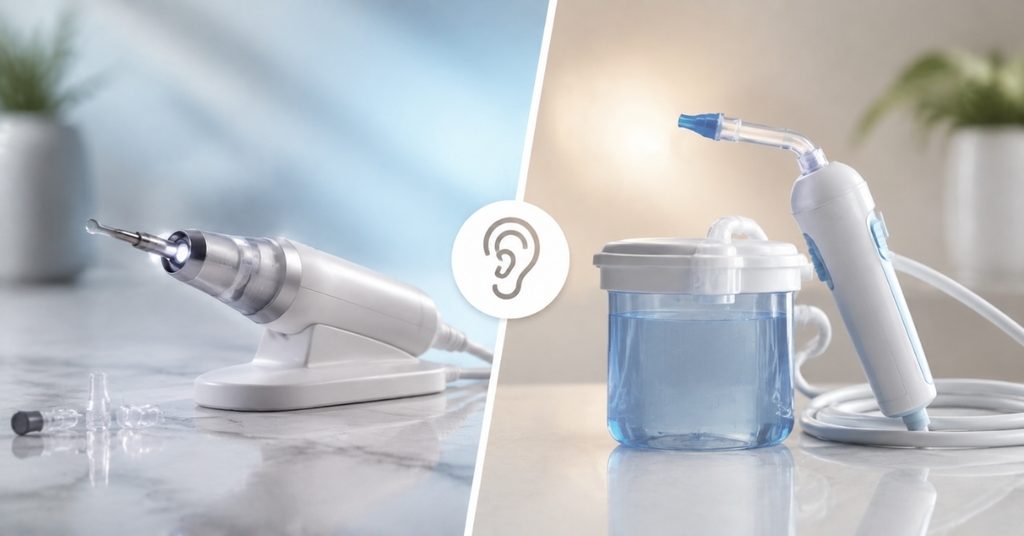
Microsuction is a dry earwax-removal technique. A trained clinician views the ear canal using magnification, such as a microscope, camera or specialist loupe, and removes wax with a fine suction tube. Because the practitioner can see the wax and surrounding structures during the procedure, removal can be targeted rather than relying on water to move the blockage.
ENT UK describes microsuction as the most widely used procedure in otology clinics and regards it as the method of choice for clearing wax or debris. The procedure can take anything from a short time to around 20 minutes, depending on the blockage, ear anatomy and consistency of the material being removed.
What Does Microsuction Feel Like?
Most people tolerate microsuction well, but it is not completely sensation-free. The suction can sound loud inside the ear, deep or hard wax may cause some discomfort, and some people can feel temporarily dizzy. A good clinician will stop or adjust the technique if the procedure becomes painful.
What Is Ear Syringing or Ear Irrigation?
Traditional ear syringing involved using a handheld syringe to direct water into the ear and dislodge wax. This is not the method recommended for adults in current UK guidance. Modern electronic ear irrigation uses purpose-designed equipment to deliver a controlled flow of water that loosens and washes wax out of the canal. NICE specifically advises against manual syringing while recognising electronic irrigation as an option.
The NHS still lists electronic ear irrigation alongside microsuction and manual removal as professional treatments that may be used for earwax build-up.
However, irrigation introduces water into the ear canal. That matters when somebody has certain ear conditions or a history that makes water exposure inappropriate. NHS guidance notes that microsuction may be used for people who should not have water in their ears, including some patients with a perforated eardrum, recent middle-ear infection or previous ear surgery.
Microsuction vs Ear Syringing: The Main Differences
| Factor | Microsuction | Electronic Ear Irrigation |
| Method | Fine suction under direct visualisation | Controlled water flow flushes wax out |
| Uses water? | No | Yes |
| View of the wax | Practitioner views the canal during removal | Wax is displaced using water flow |
| Pre-softening | May help, but is not always necessary | Often used to make removal easier |
| Suitable for every ear? | No; assessment still matters | No; water-based treatment has important contraindications |
| Typical experience | Can be noisy; occasional brief discomfort or dizziness | Wet sensation and pressure; some people may feel dizzy |
Both techniques are recognised in UK earwax care, but individual ear health affects which method is appropriate.
The key point is that neither technique should be chosen purely because it is familiar. The ear should be assessed first, and the practitioner should select a method appropriate to the patient and the type of blockage.
Is Microsuction Safer Than Ear Syringing?
For many patients, microsuction has practical safety advantages because it is performed under direct vision and does not introduce water into the ear. ENT UK states that most ENT doctors regard microsuction as safer than irrigation or manual clearance and describes it as the method of choice for wax removal.
That does not mean microsuction is risk-free. It can occasionally cause discomfort, dizziness, temporary tinnitus or trauma to the ear canal. The procedure can also sound surprisingly loud, particularly when certain types of wax interact with the suction tip. Practitioner training, careful assessment and appropriate equipment therefore remain important.
Electronic irrigation also remains a recognised option for appropriate patients. The important difference is that it may not be suitable where water entering the ear could create additional problems. A professional history and ear examination should therefore come before treatment.
Who May Be Better Suited to Microsuction?
Microsuction can be particularly useful when precision or a dry technique is desirable. Depending on the individual assessment, a clinician may favour it when:
- wax is deep, firm or positioned where direct visualisation is useful;
- the patient has previously experienced problems with water-based irrigation;
- there is a history of certain ear surgery, eardrum perforation or recent ear disease that makes irrigation unsuitable;
- wax needs to be removed so the eardrum can be properly examined or a hearing aid can work effectively;
- avoiding water in the ear is important.
These are not self-diagnosis rules. ENT UK advises that people with complex ear conditions or previous surgery may still undergo microsuction, but they should be treated by clinicians with suitable experience and access to specialist support when necessary.
Do You Need Olive Oil Before Microsuction?
Not always. ENT UK notes that an experienced clinician with the appropriate equipment can often perform microsuction without prior wax-softening drops. However, softeners can make removal easier when wax is especially hard or dry. If clearance becomes uncomfortable or cannot be completed safely, the practitioner may recommend softening the wax and arranging another appointment.
For the I Love My Ears hearing service at City Specs, the current service page states that no olive-oil pre-treatment is required for its wax-removal appointments and describes the service as taking around 15–20 minutes. Patients should still follow any individual instructions provided by their clinician.
When a “Blocked Ear” Needs Medical Assessment Instead
Wax is a common cause of muffled hearing, but it is not the only one. Treating every sudden change in hearing as wax could delay assessment of another ear problem.
Seek appropriate medical advice rather than simply arranging routine wax removal if you have:
- sudden hearing loss in one or both ears;
- hearing that has worsened noticeably over several days or weeks;
- hearing loss accompanied by ear pain or discharge;
- hearing that remains reduced after wax has already been removed.
The NHS advice seeking an urgent GP appointment or help from NHS 111 for sudden hearing loss, hearing that is rapidly worsening, or hearing loss accompanied by symptoms such as earache or discharge.
It is also worth avoiding cotton buds, fingers or other objects when an ear feels blocked. Rather than pulling wax out, these can push it deeper into the canal and make the blockage worse.
Choosing Professional Earwax Removal in the UK
The most useful question is not simply, “Which machine is better?” It is, “Which technique is appropriate for my ears, and who is performing it?”
ENT UK advises that microsuction should be carried out by appropriately trained healthcare professionals who can recognise problems affecting the ear canal or eardrum and know when further medical assessment is needed.
City Specs hosts the I Love My Ears hearing service, providing earwax removal alongside wider hearing care. Its current service information includes appointments at Meadowhall in Sheffield, alongside I Love My Ears services across Central and Greater Manchester.
For someone experiencing blocked or muffled ears, having the ear properly examined by a qualified hearing professional is a more sensible starting point than repeatedly trying home devices or attempting to remove impacted wax yourself.
Conclusion
For UK patients, the phrase ear syringing can be misleading. Traditional manual syringing is not recommended for adults by NICE; the modern water-based alternative is electronic ear irrigation. Both electronic irrigation and microsuction can have a place in professional ear wax care, but microsuction offers a major practical advantage: wax can be removed under direct visualisation without putting water into the ear.
That can make microsuction particularly useful for stubborn or deep wax and for some people who are unsuitable for irrigation. However, the right choice depends on the individual ear rather than a one-size-fits-all rule.
The direction of good earwax care is therefore not simply towards whichever technique sounds newest. It is towards careful assessment, appropriately trained professionals and choosing the removal method that best fits the patient’s ear health.
FAQs
Is microsuction better than ear syringing?
For many people, microsuction is preferred because the practitioner can see the ear canal during removal and no water is used. However, modern electronic irrigation remains a recognised option for suitable patients.
Is ear syringing still done in the UK?
Traditional manual ear syringing should not be offered to adults under NICE guidance. Some services instead use modern electronic ear irrigation, which provides controlled water-based wax removal.
Does microsuction hurt?
Microsuction is usually well tolerated. It can sound loud, and hard or deeply impacted wax may cause brief discomfort. Patients should tell the clinician immediately if the procedure becomes painful.
Can I Have Microsuction If I Have a Perforated Eardrum?
Microsuction may be considered when water-based irrigation is unsuitable, including for some people with an eardrum perforation. The ear should still be assessed by an appropriately experienced clinician before treatment.
Should I Use Cotton Buds If My Ear Feels Blocked?
No. The NHS advises against inserting cotton buds, fingers or other objects into the ear because they can push wax further into the canal and make the blockage worse.