


Before your eye test, gather the glasses you use, make a few notes about your vision and check any appointment instructions. These small jobs help your optometrist understand what has changed and what you need from your eyesight each day.
Preparation supports a more useful assessment and advice that fits your life. It cannot guarantee a particular prescription or improve your eyesight overnight. The aim is to give an honest picture of how your eyes are working, including difficulties that may not appear while you are sitting in the testing room.
Write down what happens when your vision bothers you
“My vision goes blurry after half an hour of reading” gives your optometrist more to investigate than “my eyes feel different”. Before your appointment, note:
- What you notice, such as blur, glare, headaches or grittiness.
- When it started and whether it is becoming more frequent.
- Whether it affects one eye or both.
- Which activities bring it on and whether your glasses help.
Describe what happens without trying to diagnose it. If the problem comes and goes, jot down a recent example while it is fresh in your memory.
New flashes, a sudden increase in floaters or a dark curtain across your vision need urgent assessment. Contact an optometrist urgently or NHS 111 rather than waiting for a routine booking.
Pack the glasses you actually use
Bring your everyday pair, along with separate reading or computer glasses and prescription sunglasses. Explain which pair you reach for during different activities and where each one falls short.
For example, you might read comfortably but struggle to see your monitor, or find yourself tilting your head to use your varifocals. These details help distinguish a difficulty with your prescription from one involving fit or working distance.
Include your previous prescription and any relevant eye clinic letters if available. CitySpecs’ guide to preparing for your eye test explains what to bring to your visit.
Have your health information ready
Make a current list of prescribed medicines, eye drops, over-the-counter treatments and supplements. Include their names and mention recent changes. A photograph of the packaging can help if a name is difficult to remember.
Tell your optometrist about conditions such as diabetes, previous eye surgery and any reactions to eye drops. Keep taking prescribed treatment unless the clinician responsible for it advises otherwise.
If possible, ask close relatives whether they have diagnosed eye conditions, particularly glaucoma. Knowing which relative was affected and the diagnosis is more useful than simply reporting that poor eyesight runs in the family.
Check the instructions for your contact lenses
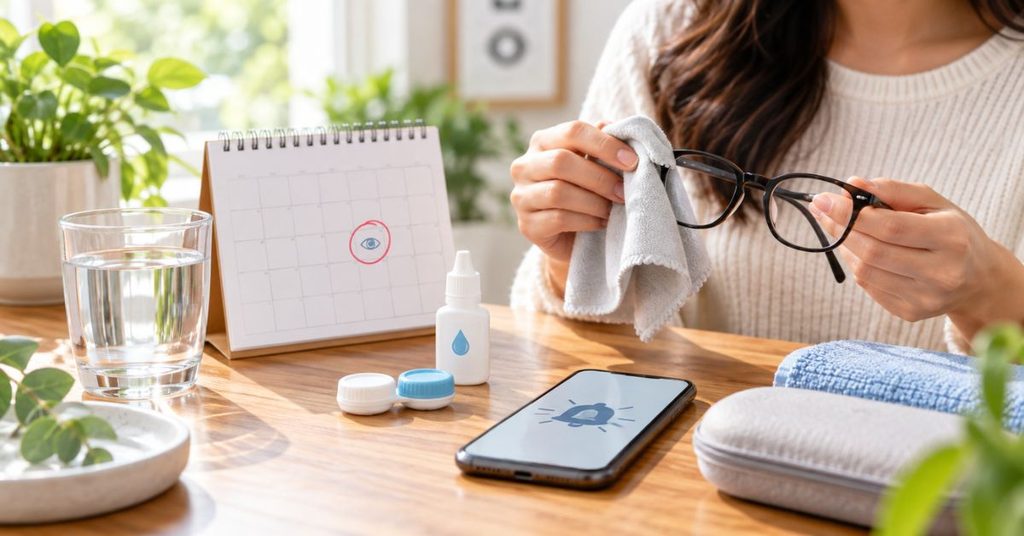
A contact lens check-up and a test for a glasses prescription can involve different preparation. For a lens check-up, the optometrist will usually want to assess your lenses while you are wearing them. Other measurements may require time without them.
Follow the instructions for your particular appointment. If none were provided, ask whether to arrive wearing lenses and whether any removal period applies to your lens type. Avoid choosing a fixed number of hours from general advice online.
Pack your glasses, lens details and, for reusable lenses, your case and usual solution. Mention how long you normally wear your lenses and when discomfort starts.
Take sensible screen breaks before you arrive
Long periods at a screen without breaks can leave your eyes feeling dry or uncomfortable. During the day, look away regularly, blink naturally and give yourself short breaks from close work. You can also put your phone away while waiting for your appointment.
These habits are about comfort; they do not replace an examination or guarantee different results. If your eyes still feel gritty or your vision fluctuates, tell the optometrist. Mention any drops you have used that day so they can take this into account.
Think about the distances you need to see
Before leaving home, notice how far away you hold a book and where your computer screen sits. If you struggle at your desk, a rough measurement from your eyes to the monitor gives the optometrist useful context.
Be specific about hobbies and work. Reading sheet music, sewing and switching between several screens place different demands on your vision. Mention frequent night driving or difficulty checking the dashboard too.
Choose the task you most want help with. Having a clear priority makes it easier to discuss whether a prescription change, different lens arrangement or further assessment could help.
Leave eye makeup off for the visit
CitySpecs recommends attending without mascara, eyeliner or eyeshadow to make examination around the eyes easier. Planning this before getting ready saves having to remove products at the appointment.
If you have sore eyelids or irritation after using a particular cosmetic, note its name and when the symptoms began. That is more helpful than covering the redness before your visit.
Plan around possible dilating drops
Ask whether dilating drops are likely, especially if they have been used at previous appointments. They can temporarily blur your vision and increase sensitivity to light, so bring sunglasses and arrange another way home if dilation is planned.
Avoid scheduling driving or work with machinery immediately afterwards. Recovery time varies with the drops used and your response. Follow the optometrist’s instructions and wait until your vision has returned to normal before driving.
Allow a little extra time to arrive and complete any forms. You can contact CitySpecs beforehand about appointment instructions, accessibility or communication needs.
Frequently asked questions
Can I attend if I have lost my old prescription?
Yes. An old prescription is helpful but is not essential for a new eye test. Bring your current glasses and explain roughly when they were prescribed.
How much time should I set aside?
CitySpecs advises allowing around 30–45 minutes for an eye test, with longer needed for additional scans or fittings. Confirm the expected duration when booking, particularly if you have another commitment afterwards.
Does my child need to practise reading letters first?
No. Tests can use pictures, shapes and methods that do not require reading. Explain the visit simply and bring a familiar comfort item. Read about children’s eye tests at CitySpecs for more detail.
What paperwork should I bring for an NHS-funded sight test?
Ask the practice which evidence applies to your eligibility and bring your NHS number if available. Requirements depend on your circumstances; having an NHS number alone does not establish entitlement to a funded test.
Should I mention worries about getting the answers wrong?
Yes. Tell the optometrist beforehand if the testing process makes you anxious. Ask them to explain or repeat instructions whenever needed, and describe what you can see without feeling pressured to give a particular answer.


