


Choosing glasses is often treated as a frame decision. People spend time comparing shapes, colours, designer names and how the glasses look on their face. But the part you look through every day matters just as much as the frame around it. The right lens brand can affect how clearly you see, how comfortable your eyes feel, how well your glasses perform at work and how confident you feel wearing them from morning to night.
This is especially important if you have a strong prescription, spend long hours on screens, drive regularly, wear progressives, or want premium eyewear that feels as good as it looks. A high-quality frame with the wrong lens choice can still feel disappointing. A carefully chosen lens brand, however, can turn your glasses into something that genuinely supports your lifestyle.
At City Specs, customers can explore premium glasses lens brands such as ZEISS, Essilor, Nikon and Rodenstock. Each brand brings a different strength, so the best choice is not simply the most famous name. It is the lens brand that fits your prescription, your daily routine, your visual comfort and the type of eyewear experience you expect.
Why Lens Brand Matters More Than Most People Realise
A lens is not just a piece of clear material shaped to your prescription. Modern prescription lenses are designed around how your eyes move, how you use different distances, how light affects your vision and how your frame sits on your face.
Two lenses may have the same prescription on paper but they can feel very different in real life. One may feel sharper when reading, another may feel more natural for driving, while another may reduce the thickness and weight of a strong prescription. This is why the lens brand matters.
For example, someone who works in a Manchester office, walks outside in changing weather, checks a phone throughout the day and drives home in the evening does not need a basic lens only. They need a lens designed for movement, different lighting and constant focus changes. That is where brand-specific lens technology becomes valuable.
Start With Your Prescription, Not the Brand Name
Before comparing ZEISS, Essilor, Nikon or Rodenstock, start with your prescription. Your prescription tells your optician what level of correction is needed, but it also gives clues about which lens design may suit you best.
Single Vision Prescriptions Need Everyday Clarity
Single vision lenses correct one field of vision, usually distance or reading. If your prescription is simple, you may still benefit from a premium lens brand if you want sharper edge-to-edge clarity, thinner lenses, better coatings or improved comfort during long days.
This matters for people who wear glasses all the time. A small improvement in clarity or reduced reflections can make a noticeable difference when reading signs, working at a laptop or moving between indoor and outdoor spaces.
Progressive Prescriptions Need Better Design Accuracy
Progressive lenses are more complex because they support distance, intermediate and near vision in one lens. The quality of the lens design can affect how smooth the transitions feel between different viewing zones.
If you are new to progressives, the right lens brand can make adaptation easier. If you already wear progressives but feel restricted, dizzy or frustrated by narrow reading areas, it may be worth discussing a more personalised lens option with your optician.
Strong Prescriptions Need Thickness and Weight Control
If you have a higher minus or plus prescription, lens thickness becomes a practical and cosmetic issue. Poor lens choice can make glasses heavier, cause the lenses to look bulky or make the eyes appear smaller or larger behind the frame.
This is where brands known for high-index, aspheric or personalised lens designs can help. The goal is not only clearer vision, but also glasses that look balanced and feel comfortable on the face.
Match the Lens Brand to Your Daily Lifestyle
The best lens brand for you depends on how you actually use your eyes each day. A student, a driver, a designer, a business owner and a retiree may all need different lens features.
For Screen-Heavy Days
If your day involves laptops, phones, tablets and close-up work, ask about lenses designed for digital comfort. These may support near and intermediate distances more naturally, helping reduce the feeling of tired eyes during long screen sessions.
This is useful for office workers, creatives, accountants, online business owners and anyone who switches between a monitor, phone and paperwork throughout the day.
For Driving and Night-Time Glare
If you drive often, especially in rain, low light or night-time traffic, lens design and coating become important. Reflections from headlights, streetlights and wet roads can make driving more tiring. A lens brand with driving-focused options may help create a more comfortable visual experience behind the wheel.
This can be especially valuable in the UK, where changing weather and darker winter evenings can make visual comfort on the road more important.
For Outdoor and Light-Sensitive Wearers
If your eyes are sensitive to sunlight or you move between indoor and outdoor spaces often, photochromic, tinted or polarised lens options may be worth considering. These can reduce the need to switch between clear glasses and sunglasses throughout the day.
For people who wear designer frames, this also allows the glasses to remain practical without compromising style.
Understand the Strengths of Popular Lens Brands
No single brand is automatically right for everyone. Each premium lens brand has its own strengths, and the right choice depends on your visual needs.
ZEISS: Precision, Digital Lifestyles and Driving Comfort
ZEISS is often chosen by people who want advanced optical precision and lifestyle-specific lens options. Its lens ranges include solutions for everyday wear, digital use, progressive vision and driving comfort.
ZEISS can be a strong choice if you want lenses that support modern visual behaviour, such as switching between phone, laptop, distance viewing and outdoor environments. It is also worth considering if you drive regularly and want lenses designed with glare and changing light conditions in mind.
Essilor: Everyday Vision, Progressives and Lens Protection
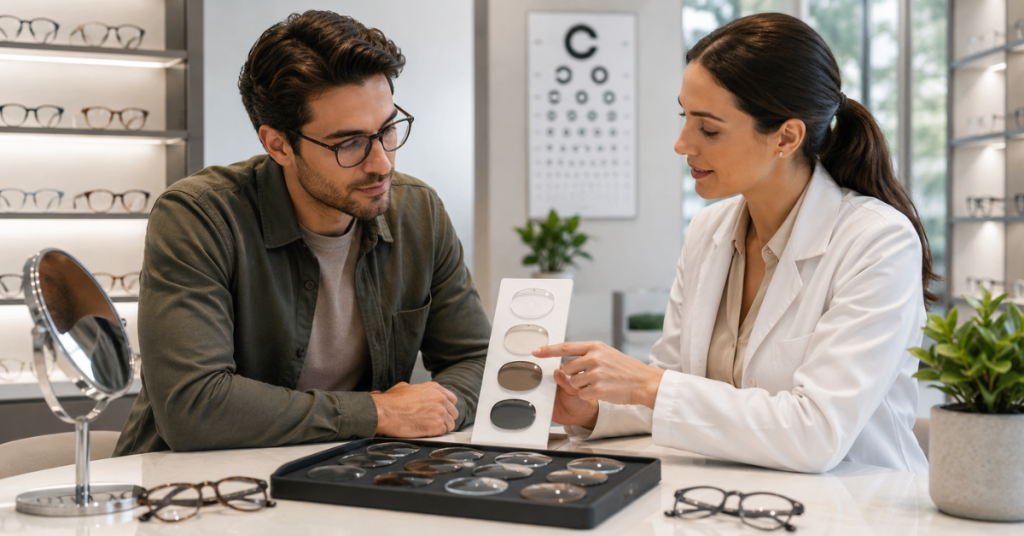
Essilor is well known for a wide range of prescription lens solutions, including lenses for clarity, comfort, protection and progressive vision. It can suit people who want reliable everyday performance with options for coatings, digital use, light filtering and sun protection.
Essilor may be a good fit if you want a balanced lens solution that supports daily life, from reading and work to outdoor use and long-term lens durability.
Nikon: Thin, Sharp and Aesthetic Lens Design
Nikon Lenswear is a strong option for people who care about both optical clarity and the appearance of their glasses. It is particularly relevant for wearers with stronger prescriptions who want lenses that look thinner, flatter and more refined in the frame.
If you choose luxury frames, Nikon lenses can be worth discussing because the lens design can help preserve the look of the eyewear while still delivering the correction you need.
Rodenstock: Personalised and Biometric Lens Thinking
Rodenstock focuses strongly on personalisation and biometric lens design. This can be useful for wearers who want lenses tailored more closely to the individual eye, rather than only standard prescription values.
Rodenstock may be suitable if you have struggled with standard lenses, want a more personalised visual experience, or are choosing premium eyewear where comfort, accuracy and natural vision are priorities.
Look Beyond the Lens Type: Coatings Matter Too
The lens brand is important, but coatings can make a big difference to how your glasses perform every day. A good coating can improve clarity, reduce annoying reflections, make lenses easier to clean and help protect against scratches.
When choosing a lens brand, ask about:
- Anti-reflective coating for clearer vision and reduced glare
- Scratch-resistant coating for better day-to-day durability
- UV protection for outdoor eye protection
- Blue-light filtering options for screen-heavy routines
- Photochromic or sun lenses for changing light conditions
- Easy-clean coatings for fingerprints, dust and smudges
These features are not just extras. For many wearers, the coating is what makes the glasses feel premium after several months of daily use.
Consider the Frame Before Finalising the Lens Brand
The right lens choice also depends on the frame. Some frames work better with certain prescriptions and lens designs than others.
A large oversized frame may look stylish, but it can make thicker lenses more noticeable if your prescription is strong. A rimless or semi-rimless frame may need a lens material that is more durable. A luxury designer frame may benefit from a thinner, premium lens that keeps the final look elegant.
This is why choosing lenses and frames together is important. A good optician will consider how the frame sits on your face, where your pupils sit within the lens and how the finished glasses will feel once the lenses are fitted.
Do Not Choose on Price Alone
It is understandable to compare prices, especially when premium lenses vary in cost. But the cheapest lens is not always the best value if you wear your glasses every day.
A lower-cost lens may be enough for occasional reading glasses or a spare pair. But if your glasses are your main pair, used for work, driving, screens and daily life, investing in the right lens brand can make more sense over time.
Think about cost in terms of daily use. If you wear your glasses for 10 to 14 hours a day, comfort, clarity and durability are not small details. They affect how you work, travel, read, relax and interact with people.
Ask the Right Questions During Your Lens Consultation
A good lens consultation should feel practical, not confusing. You do not need to know every technical term. You simply need to explain how you use your eyes and what has or has not worked in the past.
Useful questions include:
- Which lens brand best suits my prescription and frame choice?
- Do I need single vision, progressive, office or digital lenses?
- Will my lenses look thick in this frame?
- Which coating is best for my lifestyle?
- Do I need help with night driving or glare?
- Would photochromic or prescription sunglasses be better for me?
- How long should adaptation take with these lenses?
These questions help your optician recommend lenses based on real life, not just prescription numbers.
Common Mistakes to Avoid When Choosing Lens Brands
Many people make lens decisions too quickly because they focus only on the frame or final price. That can lead to glasses that look good but do not feel right.
Choosing a Brand Without Explaining Your Lifestyle
Your optician needs to know how you use your eyes. Mention your work, screen time, driving habits, hobbies and whether you mostly wear glasses indoors, outdoors or all day.
Ignoring Previous Lens Problems
If past glasses caused headaches, distortion, glare, heavy pressure on the nose or difficulty adapting to progressives, say so. These details can guide a better lens choice.
Treating All Coatings as the Same
Coatings vary in quality. Better coatings can affect clarity, cleaning, reflections and durability, so it is worth asking what is included and why it suits your needs.
Buying Designer Frames Without Matching Premium Lenses
Luxury frames deserve lenses that complement them. A premium frame with thick, reflective or poorly matched lenses can reduce both comfort and appearance.
Choosing the Right Lens Brand at City Specs
City Specs offers access to premium glasses lens brands, including ZEISS, Essilor, Nikon and Rodenstock. This gives customers the chance to choose lenses based on more than basic prescription correction.
If you are visiting City Specs in Manchester or Sheffield, the best approach is to bring your current glasses, explain what you like and dislike about them and talk through your daily routine. This helps the team recommend a lens brand that suits your prescription, frame choice and lifestyle.
For example, a professional who spends long hours on screens may need a different lens solution from someone who drives frequently at night. Someone choosing Cartier, Chrome Hearts, LINDBERG or Tom Ford frames may also want lenses that keep the final eyewear refined, light and visually balanced.
Conclusion
Choosing the right lens brand for your glasses is about more than selecting a recognisable name. It is about understanding how your eyes work throughout the day, how your prescription interacts with your frame, and what type of comfort you expect from your eyewear.
ZEISS, Essilor, Nikon and Rodenstock all offer strong lens options, but the best brand depends on your needs. Some wearers need sharper digital comfort. Others need thinner lenses, smoother progressives, better driving support, stronger coatings or a more personalised visual experience.
As eyewear becomes more lifestyle-focused, lens choice will continue to move beyond basic correction. The future of glasses is not just clearer vision. It is vision that feels natural, comfortable and tailored to the way people actually live.
FAQs
Which lens brand is best for glasses?
There is no single best lens brand for everyone. ZEISS, Essilor, Nikon and Rodenstock all offer premium options, but the right choice depends on your prescription, lifestyle, frame and visual comfort needs.
Are premium lenses worth it?
Premium lenses can be worth it if you wear glasses daily, have a strong prescription, use screens often, drive regularly or need progressives. They can improve comfort, clarity, lens appearance and long-term wearability.
What lens brand is best for driving?
ZEISS is a strong option to consider for driving-focused lenses, especially if glare, night driving or changing light conditions are concerns. Your optician can advise whether they suit your prescription and frame.
Which lens brand is good for strong prescriptions?
Nikon and other premium brands offer thin, high-index and aspheric lens options that can help strong prescriptions look lighter and more refined. The best choice also depends on your frame size and shape.
Should I choose the lens brand before the frame?
Ideally, choose the frame and lens together. Your prescription, frame size, lens thickness, coatings and lifestyle all need to work as one complete pair of glasses.


